
How to Pack Pictures, Mirrors and Artwork for Moving
A practical UK guide for safer house moves
Pictures are often the last thing people pack before moving day.
They hang on the wall until the rooms are nearly empty, then suddenly they get rushed into random boxes, wrapped in towels, or placed flat in the back of the van.
That is where damage usually happens.
Glass can crack. Frames can twist. Corners can chip. Canvas can get pressure marks. Family photos can be difficult — sometimes impossible — to replace.
If you are moving in Bournemouth, Poole, Christchurch or anywhere in the BCP area, this guide will help you pack pictures and artwork properly before moving day.
Why pictures need special care during a move
Framed pictures, mirrors and artwork are awkward because they are:
- flat but fragile
- often glass-fronted
- easy to scratch
- difficult to stack safely
- vulnerable at the corners
- often sentimental or valuable
Unlike boxes of clothes or books, pictures should not be treated as “gap fillers” in the van. They need their own protection and should be loaded upright where they cannot be crushed.
Before you start: decide what is worth moving
Before you wrap anything, take 10 minutes to check what you actually want to bring.
Look at each frame and ask:
- Is the glass already loose or cracked?
- Are the corners damaged?
- Is the backing secure?
- Is the picture valuable or sentimental?
- Would it be better to replace the frame after the move?
If the frame is already falling apart, it may be safer to remove the picture and reframe it later.
For valuable artwork, signed prints or custom-framed pieces, take photos before packing and keep any receipts or appraisals. If the item is high value, check what cover applies before moving it.
For family photos, it is also worth making digital copies before the move. A quick scan or phone photo is better than having no backup at all.
What materials you need
For safe picture packing, you may need:
- strong picture/mirror boxes
- double-walled cardboard
- clean packing paper
- bubble wrap or foam wrap
- cardboard corner protectors
- masking tape or painter’s tape
- packing tape
- labels or marker pen
- glassine paper for canvas or artwork surfaces
Avoid using newspaper directly against pictures, frames or artwork. The ink can transfer, and regular paper may not be suitable for delicate surfaces.
How to pack framed pictures with glass
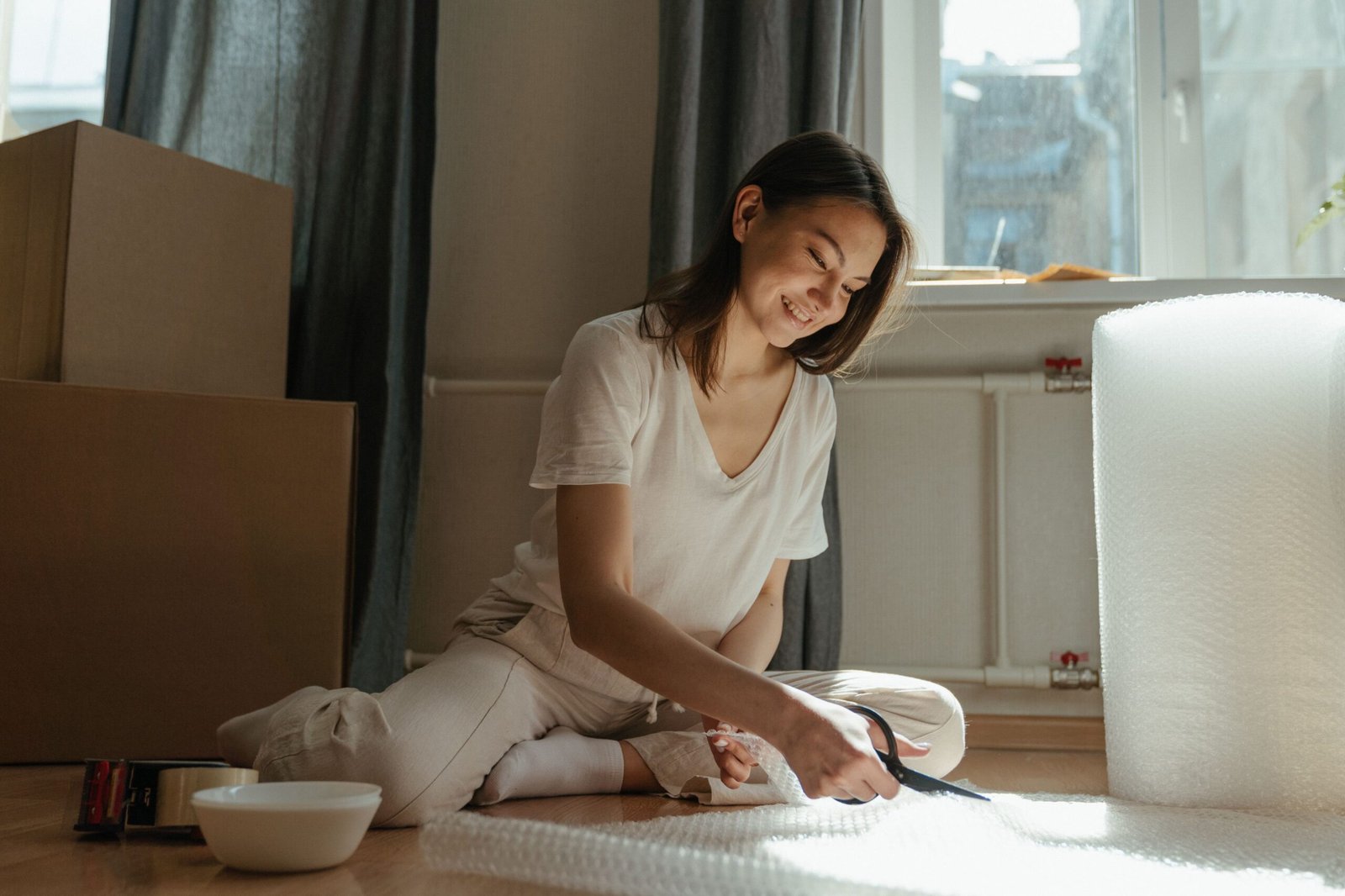
Glass-fronted frames need the most care.
Step 1: Clean and dry the frame
Use a soft, dry cloth to remove dust from the glass and frame. This is especially useful if the pictures may stay boxed for a while.
Step 2: Tape the glass
Use masking tape or painter’s tape to make a large “X” across the glass.
This does not stop glass from breaking, but if it cracks, the tape can help hold pieces together and reduce damage to the picture underneath.
Step 3: Protect the corners
Corners are usually the first part of a frame to get knocked.
Use cardboard corner protectors, folded card, or extra padding around each corner.
Step 4: Wrap the frame
Wrap the picture in clean packing paper, then add bubble wrap or foam. Keep the wrap firm, but not so tight that it puts pressure on the glass.
Step 5: Add cardboard support
Place the wrapped frame between two pieces of sturdy cardboard slightly larger than the picture. Tape the cardboard around the outside.
This gives the frame extra strength and reduces bending.
Step 6: Box it upright
Place pictures vertically in a picture box, like books on a shelf. Fill empty space with packing paper or soft padding so nothing moves inside.
Label the box clearly:
FRAGILE — PICTURES — KEEP UPRIGHT
How to pack canvas prints and artwork without glass
Canvas and artwork without glass can still be damaged by pressure, moisture and rubbing.
Do not place bubble wrap directly onto painted or printed surfaces if the finish is delicate. For artwork, use glassine paper first.
Simple method:
- Cover the front with glassine paper
- Wrap the full piece with foam or bubble wrap
- Protect the corners
- Place it between two sheets of cardboard
- Slide it into a picture/mirror box
- Label it clearly
Do not stack heavy boxes on top of canvas prints. Even if the surface does not tear, pressure marks can stay visible.
How to pack loose photos and albums
Loose photos are easy to forget, but they are often the most personal items in the home.
Pack them in:
- photo-safe envelopes
- small photo boxes
- albums
- plastic containers with lids
If you use cardboard, line it with a plastic bag or moisture-resistant layer.
Keep loose photos away from heavy items, liquids, tools and cleaning products.
For irreplaceable photos, make digital copies before the move.
How to pack large mirrors or oversized pictures
Large mirrors and oversized artwork need more than bubble wrap.
Use a proper mirror box or picture box where possible. For very large pieces, adjustable mirror boxes can be joined together to create a better fit.
The key points are:
- protect the corners
- keep the item upright
- avoid empty space inside the box
- do not allow pressure on the glass or canvas
- secure the item in the van so it cannot slide
If a mirror or artwork is very large, heavy or valuable, ask your removals company before moving day. It may need extra handling or a different loading plan.
Common mistakes to avoid
Packing pictures flat
Pictures should usually travel upright, not flat. Flat stacking increases pressure on glass, corners and canvas.
Using weak boxes
Old, thin or damp boxes can collapse. Use strong boxes for framed items.
Leaving empty space
If pictures move around inside the box, they are more likely to crack or scratch. Fill gaps properly.
Mixing pictures with tools or books
Do not pack picture frames with heavy or sharp items. Keep fragile wall art separate.
Forgetting labels
A plain box may get treated like any other box. Clear labels help movers handle it correctly.
Packing artwork at the last minute
Rushed packing leads to broken glass, missing labels and poor protection. Pack pictures earlier than you think.
How pictures should be loaded into the van
Packing is only half the job. Loading matters too.
Pictures and mirrors should normally be:
- kept upright
- placed between soft, stable items where suitable
- secured so they cannot slide
- kept away from heavy boxes
- loaded where they will not be crushed
- protected from sharp corners or loose tools
For larger mirrors or framed artwork, straps may be useful — but straps should not press directly onto glass or canvas.
Quick packing checklist
Before moving day, make sure your picture boxes are:
- wrapped
- corner-protected
- boxed upright
- padded inside
- clearly labelled
- separated from heavy items
- listed as fragile on your inventory
A few extra minutes here can save you from cracked glass, chipped frames and unnecessary stress at the new property.
Final thought
Pictures, mirrors and artwork are not always the biggest items in a move, but they are often the easiest to damage.
The safest approach is simple: slow down, protect the corners, keep everything upright, use the right boxes, and make sure your movers know which items are fragile.
If you are moving locally around Bournemouth, Poole or Christchurch and want careful handling for pictures, mirrors, fragile furniture or family items, Caritas Removals can help you plan the safest way to pack and move them.
Use the detailed quote form if you would like a clear written estimate before moving day.
FAQ
How do you pack pictures for moving?
Wrap the picture, protect the corners, place it between cardboard sheets, then box it upright in a picture or mirror box. Fill empty space so it cannot move during transport.
Should pictures be packed flat or upright?
Pictures and mirrors should usually be packed and transported upright. Flat stacking can put pressure on the glass, frame or canvas.
Can I use newspaper to wrap pictures?
It is better not to use newspaper directly on pictures or artwork because ink can transfer. Use clean packing paper, foam, bubble wrap or glassine paper for artwork surfaces.
How do you protect glass picture frames?
Tape the glass with masking tape or painter’s tape in an “X”, wrap the frame, protect the corners, and keep it upright in a strong box.
How do you pack canvas artwork?
Use glassine paper on the surface first, then foam or bubble wrap, corner protection, cardboard support and a picture box. Do not stack heavy items on top.
Should movers know which boxes contain pictures?
Yes. Label picture boxes clearly as fragile and mark them to stay upright. This helps the moving team load them safely.